

Why Some Photos Need a Human Hand — Not Automation
In a world of instant edits and one-click solutions, it’s easy to forget that photographs are more than files. They hold memory, identity, and meaning. They document moments we can’t repeat and people we can’t replace.
While automation has made image editing faster than ever, speed isn’t always what a photograph needs — especially when the image carries emotional weight. Some photos require judgment, sensitivity, and a human hand guiding every decision.
Where automation works — and where it doesn’t
There’s no denying the convenience of automated tools. Filters, presets, and AI-based edits can be useful for casual images, social media posts, or quick adjustments where precision isn’t critical.
But when a photograph matters — when it’s meant to be framed, printed, restored, or preserved — automation often falls short. These tools work by generalising. They apply the same logic to every image, regardless of context, emotion, or intention.
And that’s where problems begin.
The risks of one-click editing
Without sounding alarmist, it’s important to understand the limitations of automated edits, especially for meaningful photographs:
Flattened lighting
Automation often evens out light in ways that remove depth, atmosphere, and realism.Inconsistent skin tones
Faces can lose warmth or accuracy, particularly across different lighting conditions or skin types.Facial inaccuracies
Subtle features may be altered unintentionally — eyes, expressions, or proportions that no longer feel quite right.Pixel quality not suitable for print
Many automated edits prioritise screen display. When images are enlarged or printed, issues like softness, artefacts, or pixelation become noticeable.
These results are rarely dramatic — they’re almost right. And that’s often the problem. The image may look fine at first glance, but something feels off.
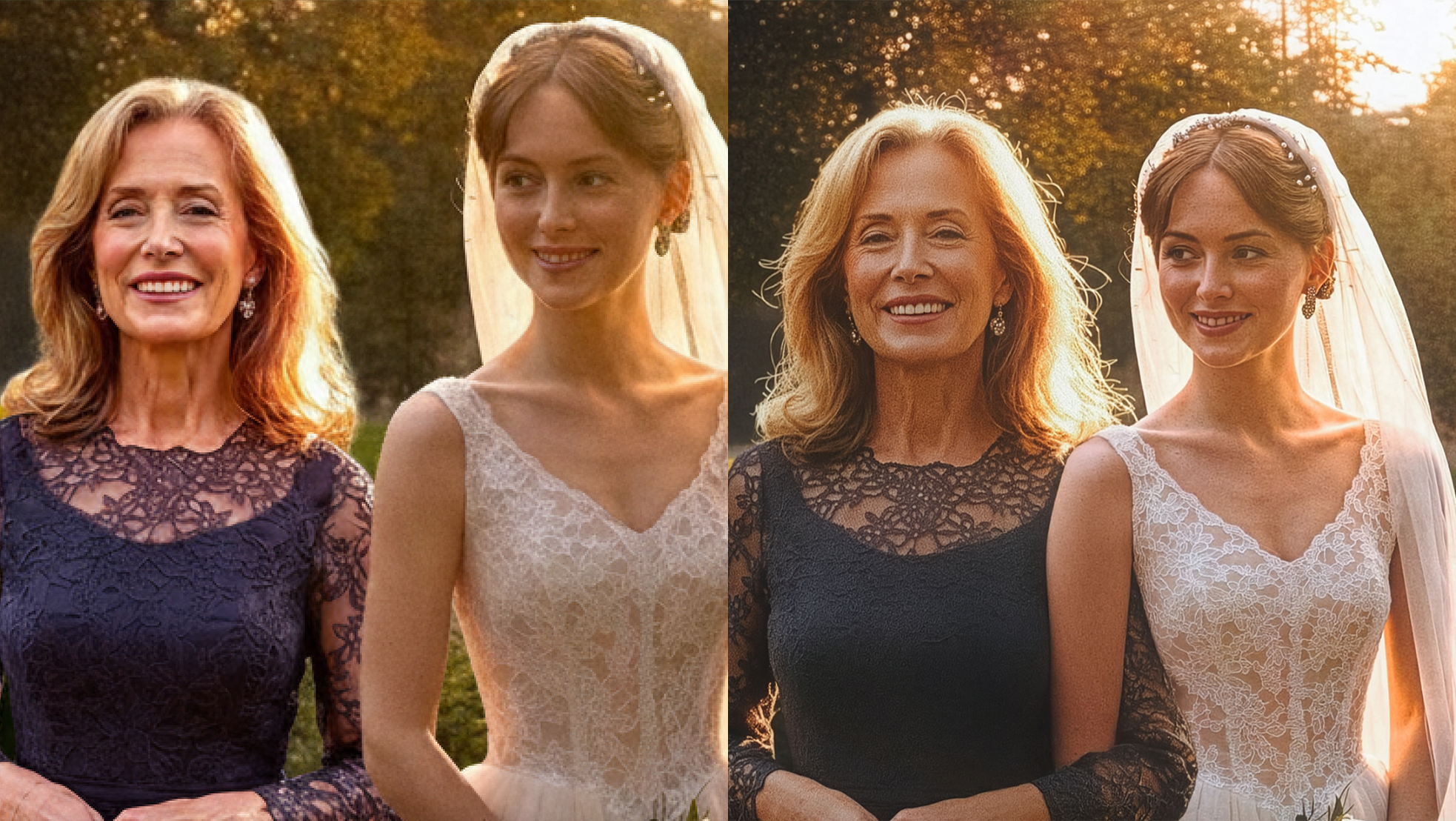
Automation VS Human-led Editing
What human-led editing protects
A human editor doesn’t just see pixels. They see context.
Human-led editing allows for:
Emotional accuracy
Respect for the original image
Decisions based on what should remain untouched
Careful attention to print quality, detail, and longevity
This is especially important for services like photo restoration, moment re-creation, or subtle retouching — where restraint matters as much as skill.
Every image tells a different story. A human editor listens before making changes.
Why before + better™ works by hand
At before + better™, every edit is completed by hand — never automated. Not because technology isn’t useful, but because meaningful photographs deserve more than a generic solution.
Whether restoring a time-worn photograph, recreating a moment that was never captured, or removing distractions that pull focus away from what matters, each image is approached with care, intention, and respect.
No shortcuts. No one-click filters. Just thoughtful editing guided by experience and emotional sensitivity.
A quieter way forward
Not every photo needs editing. And not every image needs perfection.
But when a photograph matters — when it holds memory, legacy, or love — it deserves time, care, and a human hand guiding the process.
Because some moments are too meaningful to trust to automation.